Problem
The current state of pet care websites in India reflects a consistent failure to communicate trust and warmth at the same time. Most clinics either default to an overly clinical aesthetic — white, cold, and transactional or lean into excessive cuteness that undermines the credibility of the medical services being offered. Neither approach serves the pet owner who is genuinely anxious about their animal's health and looking for a brand they can rely on. Layouts are typically disorganized, services are buried, and pricing is presented in ways that feel intimidating rather than inviting, often leading to drop-off before any real engagement happens. Within the broader context of service based web design, there is a recurring tendency to treat the website as a brochure rather than a conversion tool. Content is dumped without hierarchy, calls to action are weak or poorly placed, and visual decisions are made for aesthetic reasons rather than behavioral ones. The result is a digital presence that looks acceptable on the surface but fails to guide the visitor toward any meaningful action whether that's booking an appointment, exploring a care plan, or simply building enough trust to make contact. The design challenge for Paw Fiesta was to move away from both of these failure modes and create something that feels genuinely warm, medically credible, and easy to navigate. This meant making deliberate decisions at every layer from how pricing is presented to how the color palette communicates safety, ensuring that every visual choice served a clear purpose in the user's journey rather than existing purely for decoration.
Goal
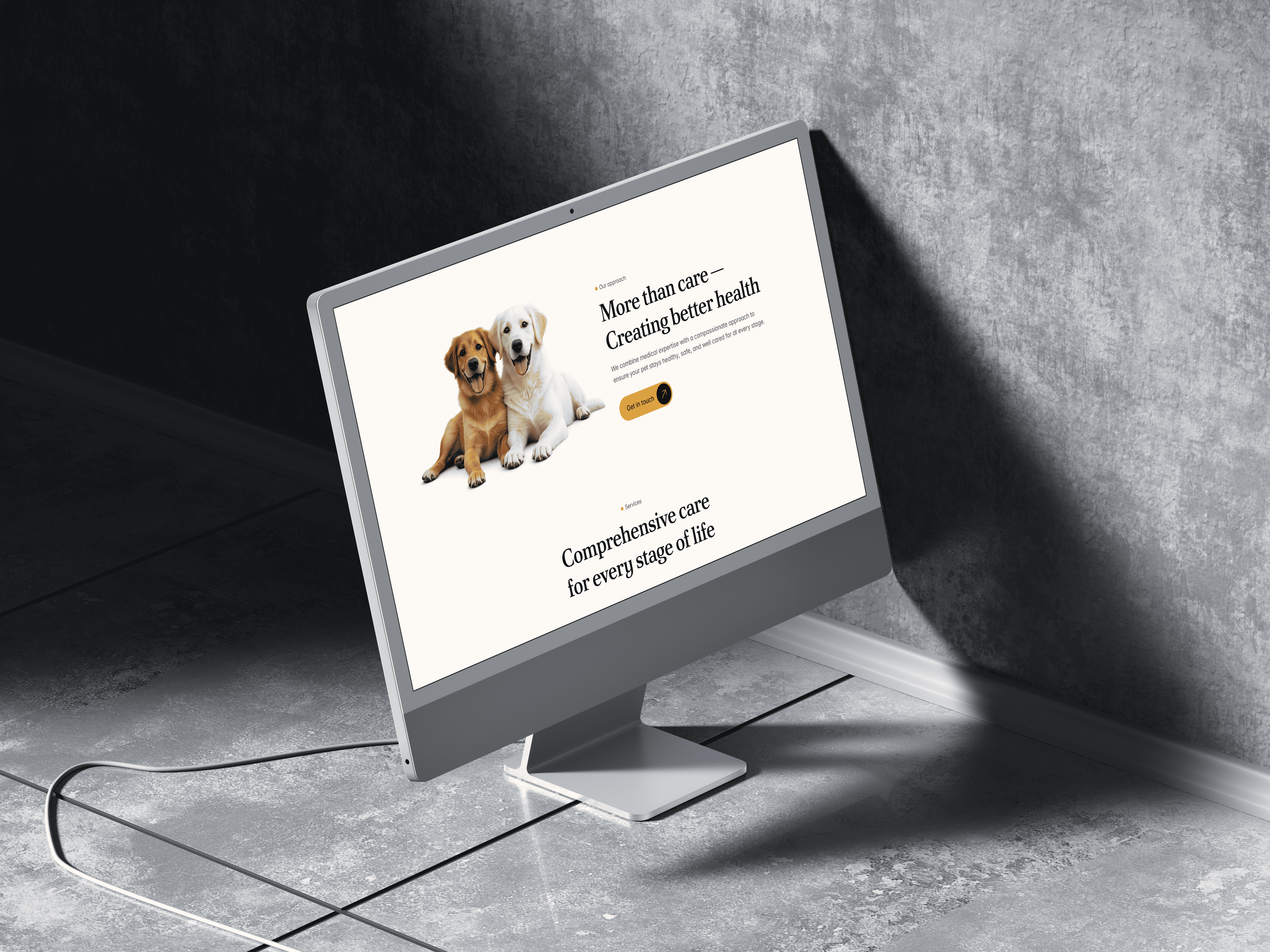
The goal of Paw Fiesta is to demonstrate how a local pet care brand can build genuine trust and emotional connection online through intentional design rather than visual noise. Instead of defaulting to either a clinical or overly playful aesthetic, the aim was to create a balanced experience that communicates warmth and medical credibility at the same time, giving pet owners the confidence to book a service without hesitation. Every section was structured to guide the visitor naturally from awareness to action, with care plans, services, and contact information presented in a clear, frictionless hierarchy. At the same time, the project set out to prove that small, deliberate design decisions carry real behavioral weight. Removing the rupee symbol from pricing cards was not a stylistic choice it was a conscious effort to reduce the psychological friction that currency symbols create at the point of consideration. The amber and cream color palette was chosen to feel alive and approachable without sacrificing the sense of professionalism the brand needs. Through a restrained layout, purposeful typography, and emotionally resonant imagery, the goal was to show that a well designed service website does not need to be complex to be compelling, it needs to be clear, considered, and built around how people actually feel when they interact with it.
Result
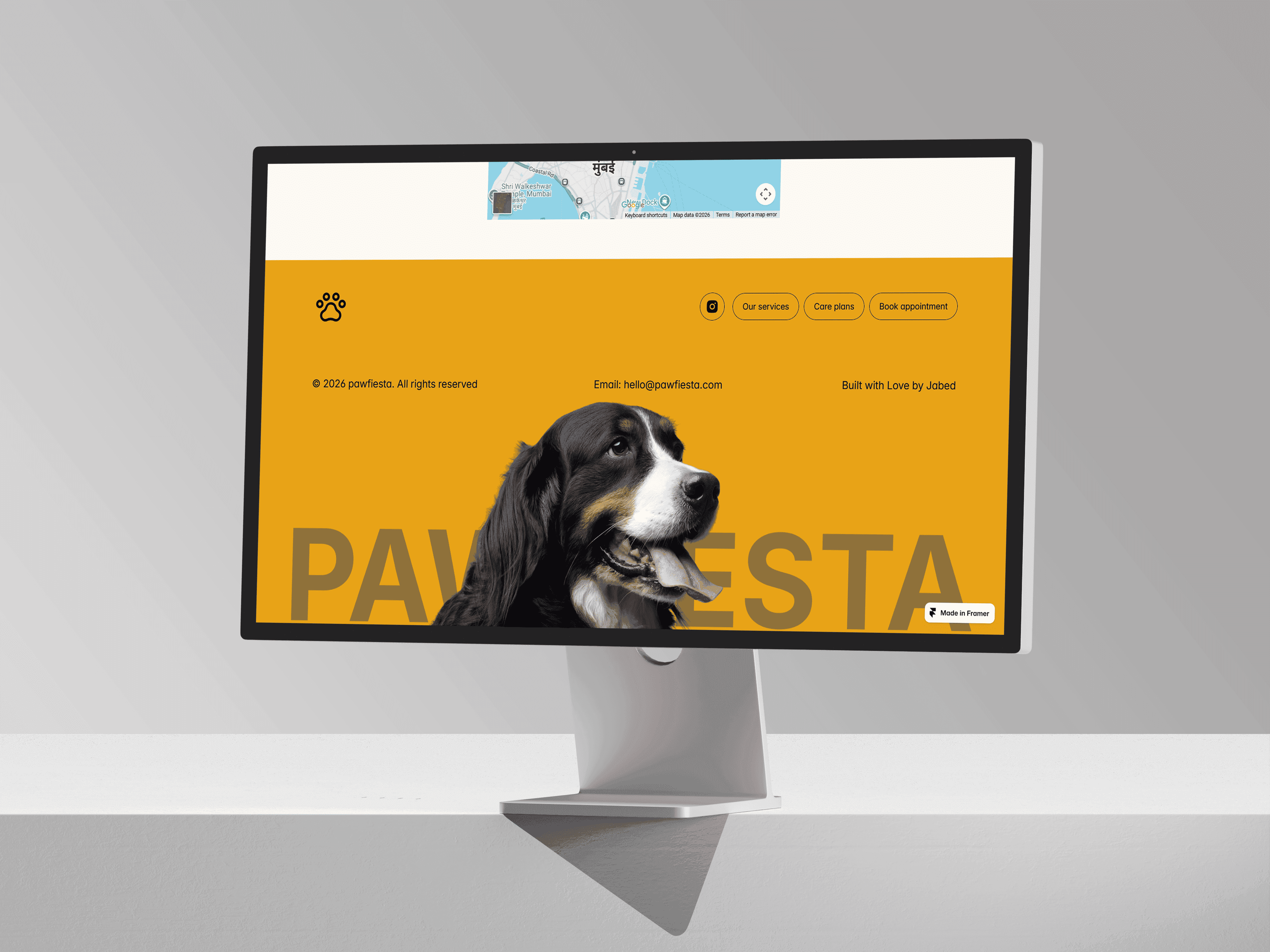
The outcome of Paw Fiesta reflects a design that successfully balances emotional warmth with functional clarity. The layout guides visitors naturally from the hero through services, social proof, and care plans in a sequence that builds confidence before asking for any commitment. The amber and cream visual system created a browsing environment that felt inviting rather than clinical, while restrained typography and purposeful imagery worked together to deliver a sense of polish that reflects the brand's core promise. The most deliberate outcome lies in the pricing section. By removing the rupee symbol and presenting only the numerical value, the design sidesteps a well documented psychological response known as the pain of paying — where currency symbols activate the same brain regions associated with physical discomfort, causing hesitation at the point of consideration. Stripping it out keeps the visitor focused on the value of the plan rather than the cost. In a real business context, this single decision has the potential to meaningfully increase plan subscriptions and drive higher revenue, demonstrating that thoughtful micro decisions in design are what separate a website that looks good from one that actually performs.