Problem
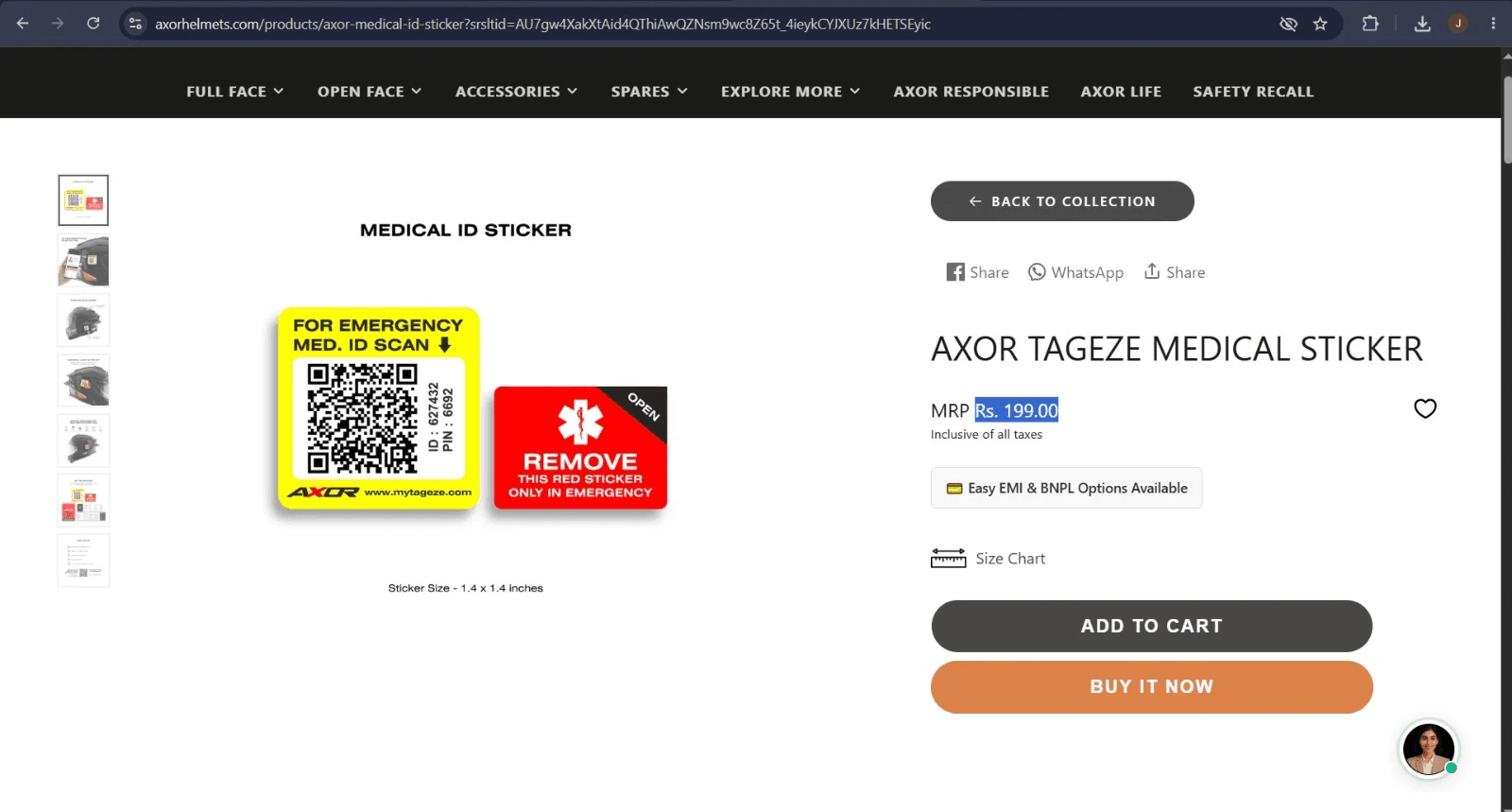
The main problem started with accessibility. Brands such as Axor and 100kmph sell emergency QR stickers and medical identification products, but products like these can cost around ₹200 to ₹500. For something as simple as a QR based sticker, that price can easily become a barrier, especially for riders who might genuinely benefit from having one. As a result, many people simply avoid getting one altogether. I felt that something which could potentially help provide critical information during an emergency should not be limited by the price of the sticker. Instead of asking people to buy another product, I wanted to make the actual solution freely accessible. This led me to build a proper web app where anyone can create their own Medical ID QR code for free and get the sticker printed locally for as little as ₹20 to ₹40, depending on the printing shop and material.
Goal
The goal was to turn a simple idea into something genuinely useful in the real world. The experience needed to be quick enough for anyone to understand without instructions, while still allowing users to include the information that could matter during an emergency. The QR code acts as the bridge between a small physical sticker and a much larger set of medical and emergency information. Another important goal was keeping the solution accessible beyond the website itself. Users should not have to depend on a specific seller, wait for delivery, or spend hundreds of rupees just to get their Medical ID. By allowing people to generate the QR code for free and print it locally, the project gives them control over how and where they use it. The wider intention was simple: remove as many barriers as possible between someone and a potentially useful safety tool.

Result
The response after deployment showed that the idea solved a problem people actually understood. Within just 24 hours of launching the web app, more than 30 people had already used it to create their own Medical IDs. The project was also appreciated by motorcycle creators and influencers, including Tiger Koul, who praised the solution and helped validate the idea within the riding community. More importantly, the project demonstrated how a small design and development decision can make a practical solution significantly more accessible. Instead of creating another product that people have to purchase, Medical ID gives them a free way to create something themselves and print it locally. The long term goal is to keep improving the experience, reach more riders and everyday users, and make carrying emergency medical information feel as normal and accessible as carrying any other safety essential.